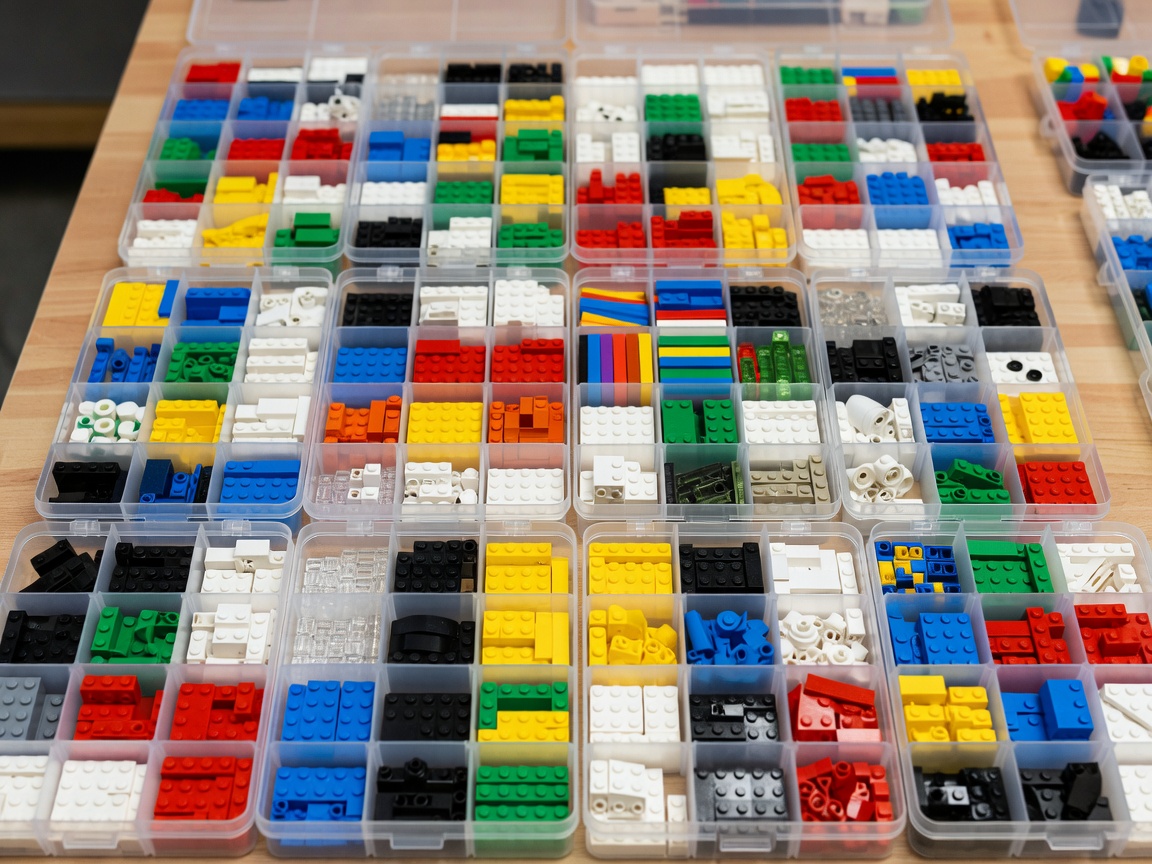
Give the collection a job
A collecting scope is a clear boundary around what you keep. It might centre on building parts, complete models, minifigures, instructions or unopened sets. It can also focus on a subject such as trains, buildings, space or vehicles. The exact choice matters less than the boundary. Without one, every interesting item competes for money, storage and attention.
Write down what belongs and what does not. Include the reason: building, display, reference, nostalgia or completion. A model bought for display needs an available shelf. Loose pieces bought for building need useful shapes and a storage destination. An unopened set needs protection from crushing and moisture. The purpose controls the practical decision.
Review the scope when storage becomes difficult or purchases stop leading to satisfying builds. Changing direction is not failure. Selling, gifting or trading material outside the new focus can restore space and make the remaining collection easier to use.
Sets, loose elements and complete collections
Sets provide a designed model, instructions and a defined group of parts. They suit builders who want a guided project or a particular subject. The trade-off is that the included element mix follows that model, not your broader building needs.
Loose elements give direct control. You can seek structural plates, hinges, slopes or a limited colour palette without acquiring another complete model. Assessing a mixed lot takes more effort because condition, cleanliness and usefulness vary. Large quantities of common pieces are not automatically valuable to your collection if you already have enough.
A used complete set can offer both a guided build and reusable elements. Confirm what “complete” means with the seller. Instructions, packaging, spare pieces and minifigures may be treated separately. Ask for clear photographs and a written description rather than assuming every original component is included.
| Format | Best fit | Main trade-off |
|---|---|---|
| New set | Guided building and gifting | Part mix follows one design |
| Used set | Building a known model | Completeness and condition need checking |
| Loose sorted parts | Filling specific building gaps | Requires a precise shopping list |
| Mixed lot | Broad experimentation | Cleaning and sorting take effort |
Read condition carefully
For loose plastic elements, inspect clutch, cracks, discolouration, scratches, odour and residue. Clips, hinges and thin bars deserve close attention because stress can affect their function. Printed parts may show wear even when the underlying piece remains usable. Stickers can lift, crease or cross multiple elements.
Packaging condition is a separate category. Creases, tears, fading, crushing and broken seals matter to box-focused collectors but do not necessarily affect the pieces inside. Instructions can have loose pages, folds or marks. Keep each condition judgement tied to the purpose of the collection.
Ask direct questions
Request photographs of the actual item, including damaged areas. Confirm whether pieces have been exposed to smoke, strong fragrances, prolonged sunlight or unsuitable storage. Keep the seller’s written description.
Judge value by use, not quantity
Price alone does not show whether an item deserves space. Compare the purchase with the parts, model or collecting gap you want to fill. A cheap mixed box can become expensive in time if most contents need cleaning, sorting and rehoming. A focused group of useful pieces can support more builds even when the quantity is smaller.
Avoid treating asking prices as confirmed value. Sale conditions, completeness, location, shipping and timing all affect a transaction. If a purchase matters financially, compare several genuinely similar completed sales where that information is available. Match condition and contents rather than relying on the product title.
Set a spending limit before browsing. Include delivery, replacement parts and storage. Leave the item if the description is unclear or the purchase depends on an unsupported claim of rarity. Scarcity does not guarantee personal usefulness or future resale.
Keep simple records
Record enough information to prevent duplicate purchases and lost components. A basic list can include the set name or element description, condition, storage location and whether anything is missing. Photograph completed models and distinctive loose groups before packing them away.
- Define the collecting purpose and available storage.
- List the specific gap you want to fill.
- Compare sets, sorted parts and mixed lots against that gap.
- Check actual condition and included contents.
- Calculate the full practical cost, including storage and repair.
- Record the item as soon as it enters the collection.
Keep the system light enough to maintain. The aim is not to catalogue every ordinary brick for its own sake. The aim is to know what you have, where it is and why it belongs.