Match storage to the way you build
The best storage system is the one you will actually reset. A highly divided collection makes specific parts easy to locate but takes longer to put away. Broad categories make clearing quick but increase search time during detailed building. Choose the point between those extremes that fits your collection and patience.
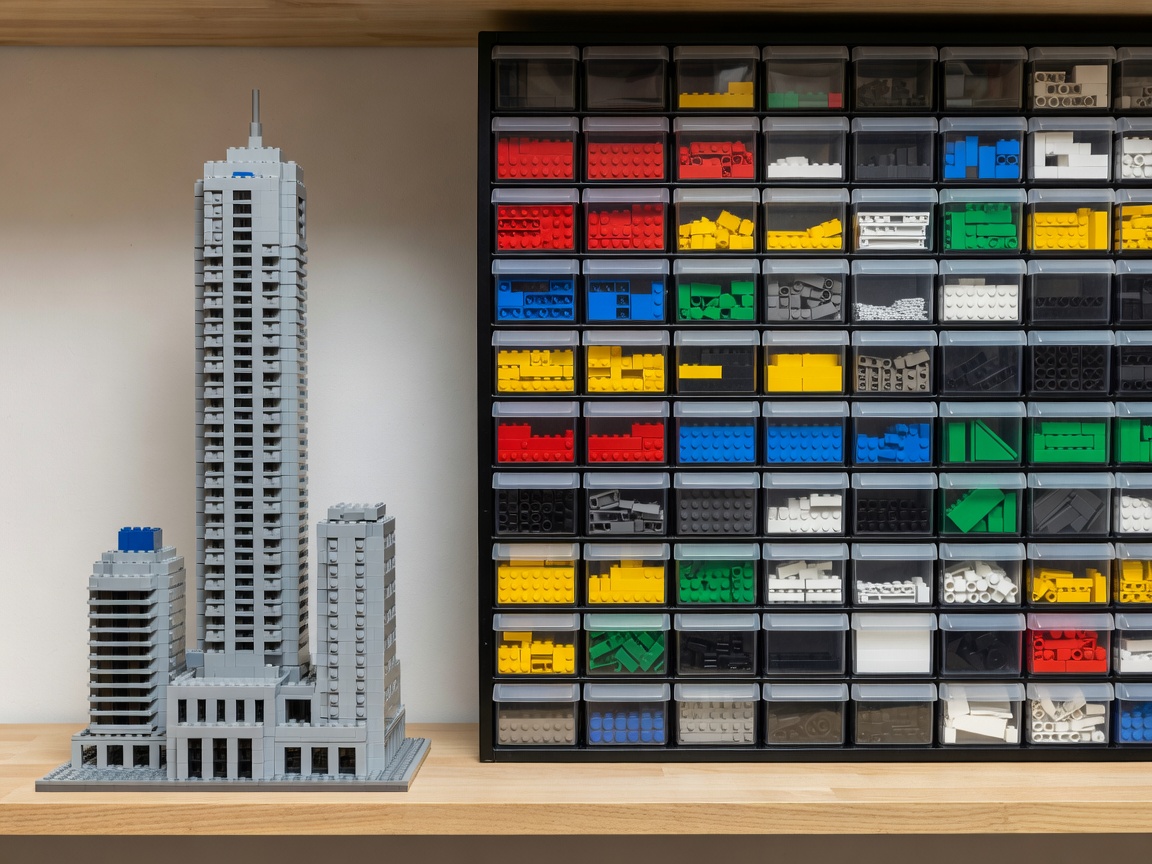
Open trays suit active projects because parts remain visible and reachable. Drawers suit frequently used categories and let you retrieve pieces without unstacking boxes. Lidded containers protect long-term storage and transport, although deep containers encourage smaller parts to settle underneath larger ones. Transparent containers reveal colour but labels still help when several categories look similar.
Keep containers light enough to move safely. Store heavy bulk elements low down. Avoid shelves that flex under a dense collection. A stable unit against a sound wall is preferable to a tall, overloaded stack of loose boxes.
Sort by element type before colour
For many builders, shape is the first useful distinction. If you need a small plate, searching one plate container is faster than searching every colour container. Broad starting groups can include bricks, plates, tiles, slopes, curved elements, modified parts, Technic elements, minifigure components and decorative pieces.
Split a category only when searching it becomes frustrating. Bricks can divide by broad size. Plates can divide into small, medium and large forms. Modified elements can separate into clips, bars, hinges and side-stud pieces. Keep rare distinctive parts together until their quantity justifies another container.
Colour-first sorting still works for builders who create large colour-blocked sculptures or mosaics. It also creates an immediate visual inventory of a palette. The trade-off is shape retrieval. A hybrid system can keep common structural elements by type and specialist project pieces by colour.
| System | Strength | Trade-off |
|---|---|---|
| Broad bins | Fast clean-up and easy expansion | Longer searches |
| Type drawers | Direct access to useful shapes | More sorting effort |
| Colour groups | Clear palette planning | Shapes become mixed |
| Project trays | Keeps work in progress together | Parts remain unavailable elsewhere |
Separate projects from the main collection
Give each active build a tray or shallow box. Include loose pieces, subassemblies and any written notes. The boundary prevents a half-built model from spreading across the room and makes it easier to move without damage.
Create a return container beside the workspace. Drop rejected pieces into it instead of stopping to file each one during a creative session. Sort that container when the project ends or before it becomes difficult to manage. This preserves momentum without abandoning the storage system.
Keep dismantling deliberate
Photograph a model before taking it apart if you may rebuild it. Separate fragile connections by supporting both sides. Move dismantled pieces into the return container rather than mixing them with another active project.
Protect models without sealing them away
Choose a display location away from prolonged direct sunlight, strong heat, moisture and unstable edges. Light can affect plastic and printed surfaces over time. Heat can distort elements. Dust settles fastest on exposed studs and detailed surfaces, making enclosed display useful for models that stay assembled for long periods.
Measure the model at its widest and highest points before selecting a shelf or case. Include antennas, wings and removable sections. Leave hand space around it so you can lift the model from a strong area rather than pulling a fragile detail. A deep shelf is only useful if rear models remain visible and reachable.
Place large models on a firm base or tray when moving them. This reduces stress from gripping the sides and catches small pieces that detach. For wall-mounted shelves, follow the shelf manufacturer’s installation guidance and use fixings suitable for the wall. If unsure, ask a competent installer.
Rotate displays when shelf space is limited. Store retired models as complete sections if rebuilding matters, or dismantle them to release useful pieces. A smaller edited display gives each model more visual room and makes dusting easier.
Use a short reset routine
- Return tools, instructions and unused baseplates to their locations.
- Move loose project pieces into the correct tray.
- Put obvious large categories away first.
- Sort small specialist pieces after the broad groups are clear.
- Check the floor, chair and clothing for dropped elements.
- Leave one clean building surface ready for the next session.
Labels should use ordinary names that make sense to everyone using the collection. Add a small example piece behind a clear drawer front if words are not enough. Review labels after using the system, not before. Real search habits reveal which categories need to change.
Do not expand the storage every time the collection grows. First remove empty packaging you do not intend to keep, merge underused categories and dismantle models that no longer need to remain intact. Storage should make building easier, not merely postpone decisions about what belongs.